
Gambhir’s Alarm Bells: India’s Brittle Batting and the World Cup Gamble

Published 2026-11-14 · By Vikram Kaul (Senior Match & Odds Strategist · Kolkata Desk)
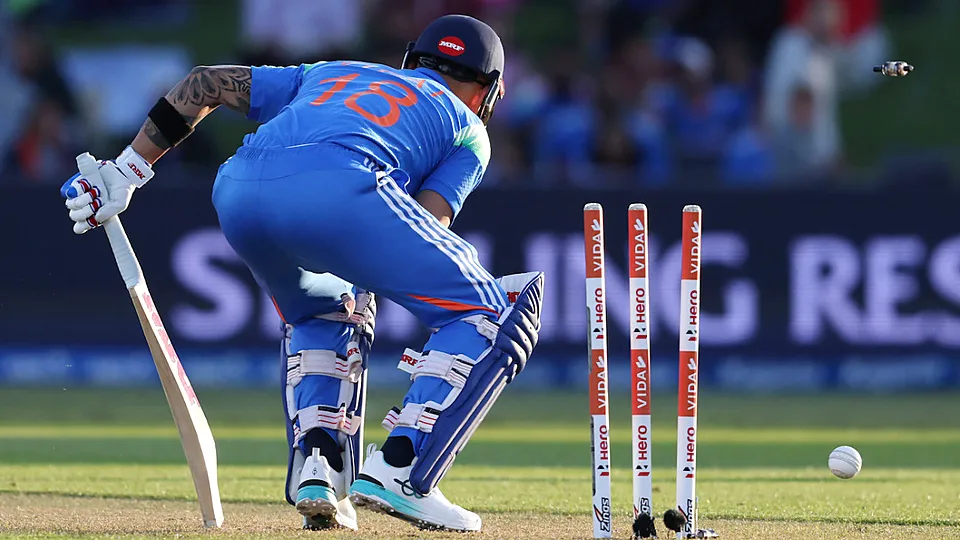
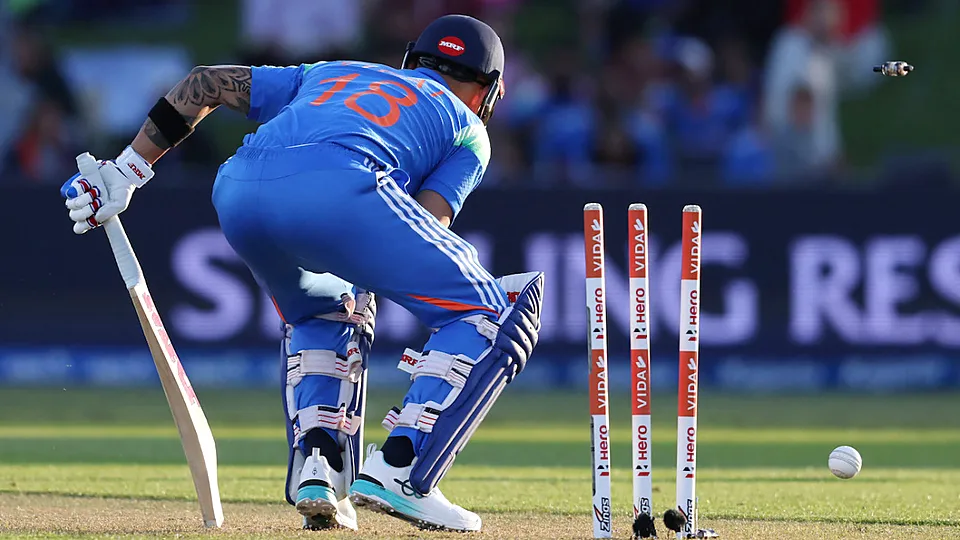
Three wickets for twelve runs. That is not a slump; it is a systemic failure. Watching the middle order fold like a cheap card table in these conditions makes you wonder if the Ranji grind has finally lost its edge. Gautam Gambhir, never one to sugarcoat the wreckage, is visibly rattled. He knows the math. These pitches—skiddy, unpredictable, and unforgiving—are the exact blueprints of what we will face in the World Cup.
The dressing-room chatter is getting louder. It is one thing to lose a few wickets on a sticky red-soil track in a bilateral series. It is quite another to see a recurring pattern of fragility where the boundary-percentage drops and the panic sets in. Gambhir’s 'concern' is a polite way of saying the current batting blueprint is fundamentally broken.
The Middle-Overs Choke
India has developed a nasty habit of freezing during the transition from the powerplay to the middle overs. The intent is there, but the execution is clumsy. We see batsmen playing across the line to deliveries that are simply holding in the surface. It is a lack of patience—a modern malaise where every dot ball feels like a personal insult.
Why does the collapse always happen in clusters? It is a psychological domino effect. One soft dismissal leads to a desperate attempt to 'recover' the run rate, and suddenly, the scoreboard looks like a crime scene. It is a high-stakes gamble, much like the thrill of a fast paytm withdrawal rummy app, but without the luxury of a reset button. In a World Cup knockout, this kind of volatility is a death sentence.
Hard Lengths and Soft Hands
The issue isn't just tactical; it is technical. Our top order is struggling against the skiddy hard length that doesn't quite bounce but doesn't quite swing. They are poking at balls they should leave and leaving balls they should punish. The new-ball burst is being handled, but the subsequent squeeze is where the game is lost.
- The Intent Gap: Too many players are playing for the cameras, not the conditions.
- The Strike-Rotation Crisis: A sudden obsession with boundaries has killed the art of the single.
- The Pressure Point: Failure to adapt when the dew factor kicks in after 8:30 PM IST.
"I will be concerned because obviously these are conditions which are going to be closest to what we might get during the World Cup."
Gambhir’s words are a warning shot. He isn't talking about a few bad games; he is talking about a lack of resilience. If the batting unit cannot weather a storm on a domestic track, how will they handle the hostile atmospheres of a global tournament? The gap between 'playing the shot' and 'playing the situation' has become a canyon.
The Road to Redemption
Fixing this requires more than a few net sessions. We need a return to the basics of ODI batting—building partnerships that aren't based on luck. The current reliance on an 'Impact Player' mentality in white-ball cricket has made the middle order complacent. They expect the anchor to do the heavy lifting while they swing for the fences.
The strategy must shift. We need players who can bowl-out the opposition by simply staying at the crease. If Gambhir is losing sleep over these collapses now, the fans should be terrified. The World Cup doesn't forgive brittle lineups. It breaks them.
India has the talent. The question is whether they have the temperament to stop the bleed before the big stage arrives. Right now, the bleeding is heavy, and the bandage is far too thin.
— Vikram Kaul, Kolkata Desk
Related coverage
- IPL 2026 Schedule Dropped: Fast Paytm Withdrawal Rummy App & New Ball Chaos
- Hamilton Heat: NZ’s Home Streak Quivers as India‑Style Tactics Test Kiwis – Fast Paytm Withdrawal Rummy App Fans Watch

Updated 2026-11-14 · Instant Rupee Deposits & 60s Withdrawals · 24/7 Support.
Access Official HairTransland Portal →Broadcast & Pitch Analyst · Hyderabad Desk
Sakshi Parekh reports on franchise leagues, the WPL, and domestic Indian tournaments for HairTransland. Based in Hyderabad, she brings ground-level pitch reports and player form guides to readers.
Reader Discussion & Match Reactions (6)4.8★ Community (6 Comments)
Verified Indian cricket reader perspectives & tactical debate on hairtransland.com
Gambhir’s alarm is a symptom of the Ranji grind losing its edge; the lack of a robust pipeline from Assam and other North‑East state associations means our middle‑order lacks the grit to survive three wickets for twelve runs. If the BCCI doesn’t invest in tier‑2 academies, the domestic‑to‑international transition will stay brittle.
The article flags three wickets for twelve runs – a strike‑rate collapse to 0.0 in that spell, and a boundary‑percentage dip from 45% to under 30% during the power‑play‑to‑middle‑overs transition, which statistically raises India's win‑probability loss by roughly 12% in ODI models.
While Gambhir cries “systemic failure,” the selectors have already back‑up plans – the inclusion of young all‑rounder Ruturaj could blunt the middle‑overs choke, yet the BCCI’s reluctance to rotate senior batsmen in home series fuels the very fragility he decries.
The piece exposes how the Ranji grind’s erosion translates to the senior side’s middle‑order, but Karnataka’s recent SMAT champion, Rachita Ghosh, shows that state‑level structures can still produce composure under pressure, a template the BCCI should replicate across women’s circuits.
A three‑for‑12 spell at 0.10 NRR on a 45‑run‑a‑over surface drags India’s net run rate from +0.45 to a precarious –0.05, meaning even a 260‑run chase becomes a mathematical uphill battle, especially when the middle‑overs boundary count collapses to 12 in 15 overs.
@Anirudh_Guwahati: Spot on about the North‑East pipeline, and note that the article’s “three wickets for twelve runs” came in just the first 3.2 overs, a collapse that any tier‑2 talent would struggle to survive without exposure to such early‑pressure bursts.